
 +38(044)-234-42-73


Analytical note on the compliance of the legislative initiative of the Ministry of Finance of Ukraine on the revision of excise tax rates on tobacco products to EU guidelines
 Прес-служба
 On March 18, 2024, the Verkhovna Rada of Ukraine registered the legislative project “On Amendments to the Tax Code of Ukraine on Revision of Excise Tax Rates on Tobacco Products,” developed by the Cabinet of Ministers of Ukraine under Reg. No. 11090 (hereinafter — Draft Law No. 11090).
According to the explanatory note, the main purpose of the draft law is:
- a gradual increase in excise tax rates for cigarettes until 2028 to reach the minimum level set by Council Directive 2011/64/EU of June 21, 2011 on the structure and rates of excise duty applied to manufactured tobacco (codification), with an equivalent increase in such rates for tobacco, industrial tobacco substitutes, and a slower increase for electronically heated tobacco products (hereinafter referred to as “HTP”);
- determining the monetary measurement unit for the excise tax rate on tobacco products in euros in order to avoid inflationary impacts on the excise tax rate increases;
- clarification of certain provisions of the administration of excise taxes on tobacco products to ensure full application of the law.
The Ukrainian National Committee of the International Chamber of Commerce has analyzed the provisions of the relevant legislative initiative, and deems it appropriate to pay special attention to the following matters:
Draft Law 11090, among other things, provides for a gradual increase in the minimum excise tax liability on cigarettes up to EUR 90 per thousand units by 2028, as well as a different excise tax rate increase on HTP up to EUR 72 per thousand units. This means that the difference between the excise tax levels on these two products will gradually widen, and upon the final stage of the reform, the excise tax will be 20% lower on HTP than on cigarettes.
The Ukrainian National Committee of the International Chamber of Commerce has studied the issue and international experiences in setting different excise tax rates based on various categories of tobacco and nicotine-containing products, cigarettes and HTP in particular.
Information obtained from open sources from Slovakia, Poland, Romania, Latvia, and Italy shows that it is common practice in EU countries to set different levels of excise tax rates between cigarettes and HTP. Let’s look at this in more detail.
Slovakia
First of all, it is important to note that the schedule of tobacco excise tax increases in Slovakia in 2024–2025 provides for a 63% difference between the excise tax rates on cigarettes and HTP. The reason for maintaining this approach to taxation is the growing evidence of potentially lesser health risks presented by HTP use versus traditional cigarettes.
According to the current tax regulations in Slovakia, the minimum excise tax on cigarettes is EUR 148 per thousand units. HTP are instead categorized as smokeless tobacco products, the tax being based on the weight of tobacco in the product, in kilograms. The excise tax rate on HTP is currently EUR 211.3 per kg, which in terms of units amounts to EUR 56 per thousand units. That is, this rate is even lower than the current rate in Ukraine: UAH 2,516.54 (about EUR 58) per thousand units.
The lowest excise tax rate among tobacco products in Slovakia is for other loose smoking tobacco, which in 2024 is EUR 139 per kg.
Poland
In Poland, in 2024, the minimum excise tax rate on HTP is set at PLN 564.51 per kilogram (equivalent to PLN 149.54 per thousand units); on cigarettes, PLN 564.25 per thousand units. Accordingly, the difference between the levels of excise duty on these two types of products is 74%.
Poland’s peculiarity is that its minimum excise tax on cigarettes is one of the EU’s lowest. In 2022, it amounted to about EUR 101 per thousand units in terms of euros. At the same time, when introducing the excise tax on HTP in July 2020, the country focused on not exceeding the average European level of the respective rate. Poland’s excise tax on HTP is near the rates in neighboring Czech Republic and Lithuania, preventing smuggling.
The current Polish excise plan for 2023–2027 envisages a further increase in the excise tax on cigarettes and HTP at a rate of 10% annually. Thus, there will be no change in the difference between tax rates on these two products.
Romania
In Romania, the current difference between the excise tax rates on cigarettes and HTP is slightly lower than in the previous two countries, at 56%.
In 2022, Romania approved a 5-year excise tax plan for all categories of tobacco and nicotine-containing products to ensure stability and predictability in the market and budget revenue generation. This plan aims to establish a 55% difference in excise tax between cigarettes and HTP. In other words, both rates will continue to rise over the next two years, but the difference between their levels will not change. This proportion between the rates will remain in place after 2026, when the current excise plan sunsets.
Starting April 1, 2024, the excise tax rate on HTP in Romania will be RON 1,094 per kg, which is equivalent to EUR 218.8 per kg or EUR 58 per thousand units. This is slightly higher than Slovakia’s and identical to Ukraine’s.
We would like to emphasize that the Romanian Tax Code defines HTP as products with potential reduced risk, as of September 2022. In particular, Article 439 has the following provisions:
“Article 439 — Scope of Application
(1) Non-harmonized excise taxes are state budget revenues collected in accordance with the provisions of the current section.
(2) Non-harmonized excise taxes are specific taxes applied to the following products with the potential for reduced risk:
a) Tobacco products intended for inhalation without combustion, tariff classification CN 2404 11 00; including those supplied in containers delivered together with electronic cigarettes and other similar personal electronic vaporizing devices, code CN 8543 40 00;
b) Liquids with or without nicotine, intended for inhalation without combustion, tariff classification CN 2404 12 00, 2404 19 90; including those supplied in containers delivered together with electronic cigarettes and other similar personal electronic vaporizing devices, code CN 8543 40 00;
c) Products intended to be inhaled without combustion, containing tobacco substitutes, with or without nicotine, tariff classification CN 2404 12 00, 2404 19 10; including those supplied in containers delivered together with electronic cigarettes and other similar personal electronic vaporizing devices, code CN 8543 40 00.”
Latvia
Latvia has a plan to increase the excise tax on all tobacco and nicotine-containing products from 2023 to 2026. In particular, the minimum excise tax liability for cigarettes in 2024 is EUR 156.3 per 1000 cigarettes, and in 2025 and 2026 it will increase to EUR 171.9 and 189.1, respectively. However, lower excise rates for HTP are envisaged: EUR 251 per kg (EUR 66.5 per thousand units) in 2024, EUR 276 per kg (EUR 73.2 per thousand units) in 2025, and EUR 304 per kg (EUR 80.6 per thousand units) in 2026. At the same time, the differences between the levels of excise duty on cigarettes and HTP will remain unchanged and amount to 57.5%.
Italy
Interestingly, in 2016, the world’s first factory for the production of innovative tobacco products, HTP, was opened in Italy. For this purpose, an investment of more than EUR 1.2 million was attracted; today, the factory employs more than 2,100 people. Heating sticks produced in Italy are exported to more than 50 countries, and the volume of these exports had increased from EUR 177 million in 2016 to more than EUR 1.8 billion in 2022.
Thanks to the investment, HTP production supports an integrated value chain consisting of about 8,000 Italian companies, 1,000 of which operate in the agricultural sector, creating jobs for about 41,000 people across the country and providing a total annual contribution to Italy’s GDP of EUR 10.1 billion (0.5% of the country’s GDP).
It should be noted that Europe’s second HTP factory has been launched in Romania, and there are prospects for expanding production through new investments in other countries. Ukraine, in particular, could become such a country.
Under Italian law, HTP are classified as smokeless tobacco products and labeled as “tobacco products intended for inhalation without combustion.”
The peculiarity of HTP taxation in Italy is that the rate is pegged to the excise tax amount per thousand cigarettes sold at their weighted average retail price for the previous year. In particular, the 2023 excise tax on HTP was 36.5% of the excise tax on cigarettes (i.e., the difference between the excise tax burden on the two products was 63.5%); in 2024 it will be 38% of the excise tax on cigarettes, and will increase in 2026 to 42% of the excise tax on cigarettes.
The use of this approach to taxation does not mean that there haven’t been any attempts in Italy to impose a higher tax on HTP. In particular, initiatives were put forward to raise the excise tax on HTP to a level that would correspond to the 80% excise tax on cigarettes. However, when adopting the legislative changes, the Italian Parliament took a pragmatic position, looking at both the potential lesser health risks from the use of HTP and the economic impact of investments in their production.
Thus, in the aforementioned EU countries, there is an even greater difference between the level of excise tax rates on cigarettes and HTP than the government’s draft law No. 11090 proposes to achieve from 2025 to 2028.
Other important findings of the analysis include the following:
1. There are countries where the potentially reduced health risks from the use of HTP compared to cigarettes is enshrined in law.
2. Poland took the risks of smuggling into account when establishing the excise tax on HTP.
3. None of the analyzed EU member states are planning to significantly reduce the gap between excise tax rates on HTP and cigarettes, let alone equalize them.
4. In Slovakia and Romania, the excise tax on HTP is already close to the level set in Ukraine.
Therefore, Draft Law No. 11090 should be supported by the Verkhovna Rada of Ukraine, both in general and in terms of harmonizing the taxation of HTP.
Last news
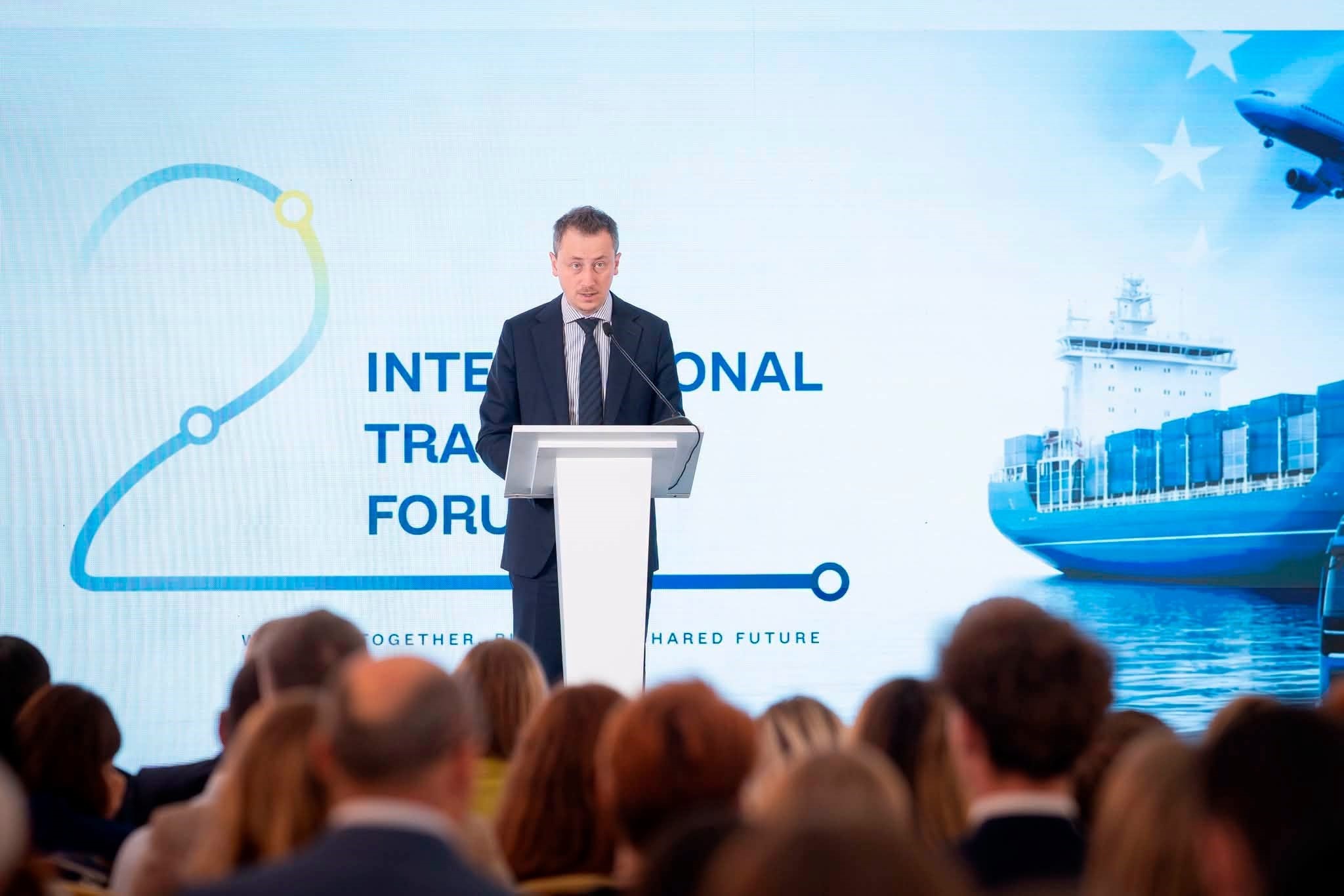
The Government Presented the Export Strategy of Ukraine until 2030
Representatives of ICC Ukraine joined the presentation of the Export Strategy of Ukraine until 2030, which took place during the…
13.07.2026
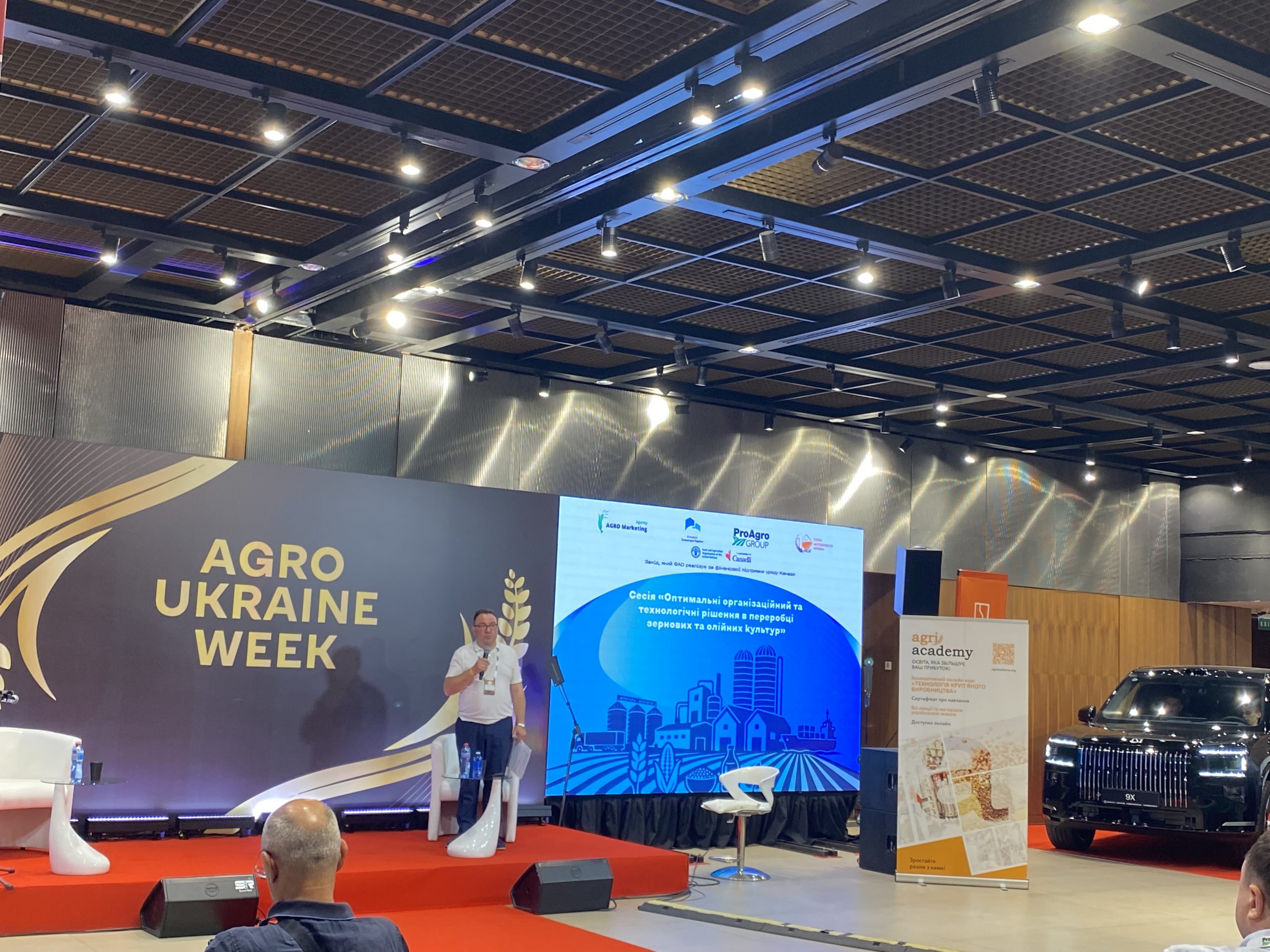
Agro Ukraine Week 2026: Three Days That United Agrarian Ukraine
From June 17 to 19, 2026, the International Agrarian Week "Agro Ukraine Week 2026" took place in Kyiv. It was…
24.06.2026
New ICC Arbitration Rules from June 2026: Faster, Clearer, More User-Friendly
The International Chamber of Commerce (ICC) has adopted an updated version of its Arbitration Rules. The new rules came into…

22.06.2026
ICC Ukraine’s Participation in the World Council Meeting during ICC Week 2026
On June 11, 2026, the meeting of the World Council, the highest governing body of the International Chamber of Commerce…

17.06.2026
ICC Ukraine at ICC Week 2026
On June 10, Tetiana Savosko, Executive Director of ICC Ukraine, took part in the ICC Permanent Heads Meeting and a…

16.06.2026
ICC Week 2026: Representatives of ICC Ukraine Actively Participated in the Work of ICC National Committees
Within the framework of ICC Week 2026, representatives of ICC Ukraine actively participated in the work of ICC national committees…

15.06.2026
Security of Foreign Economic Activity and Fraud Protection: ICC Ukraine and SIDCON Held a Practical Webinar for Exporters
On June 3, 2026, the Ukrainian National Committee of the International Chamber of Commerce (ICC Ukraine), in cooperation with the…

04.06.2026
eATA Carnet
The eATA Carnet system digitalizes traditional paper ATA Carnets and their lifecycle management process, allowing users to initiate and track…

02.06.2026
Ukraine needs an “Infrastructure Ramstein” to support railways and logistics during the war
Volodymyr Shchelkunov, Chair the of ICC Ukraine: — The fifth year of the full-scale war has demonstrated that Ukraine’s transport…

01.06.2026
Ukrainian Business in Switzerland: ICC Ukraine Hosted a Practical Webinar for Entrepreneurs
How to Turn the "Expensive and Complex" Stereotype into a Working Success Strategy? On April 29, the International Chamber of…

06.05.2026
ICC Ukraine and the Ukrainian Bar Association have signed a memorandum of cooperation
The Ukrainian National Committee of the International Chamber of Commerce (ICC Ukraine) and the Ukrainian Bar Association (UBA) have signed…

28.04.2026
Integration Forum “Paths and Financing for the Recovery of Territorial Communities: Strategy 2026” in Ivano-Frankivsk
April 23, 2026, in Ivano-Frankivsk, the Integration Forum “Paths and Financing for the Recovery of Territorial Communities: Strategy 2026” took…

27.04.2026